Concept Process Evolution Grid
Starts simple enough, but wow... things get messy pretty quick.
Every level begins with a single idea.
A rule. A constraint. A pattern. As you progress, that rule evolves.
New mechanics build on previous ones, and the system grows more layered. This is not about speed.
It’s about understanding how structure emerges.
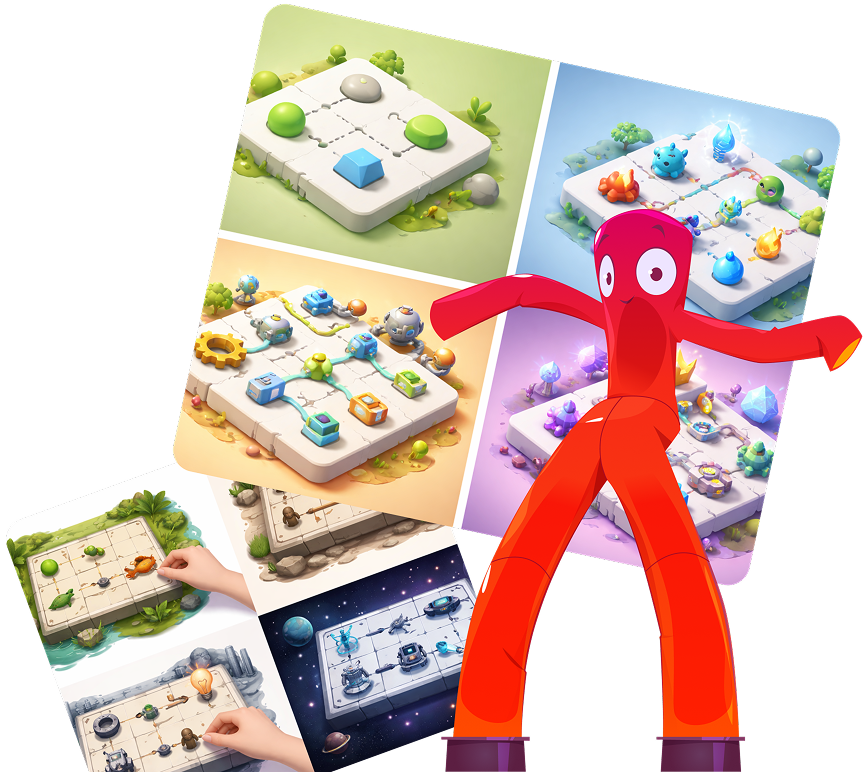
A Puzzle About Development
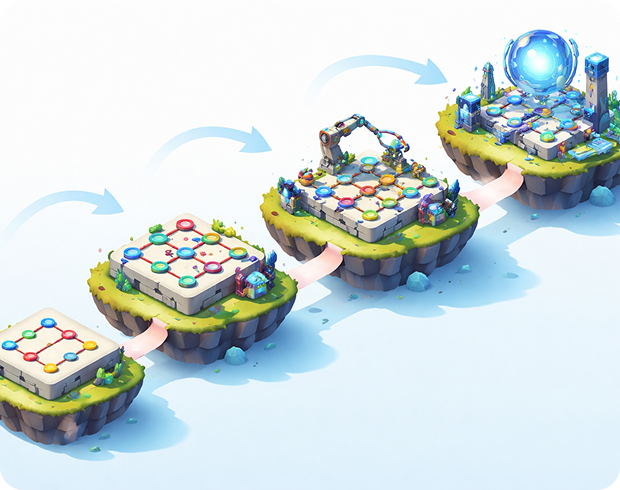
So here's the thing - Evolution Grid is all about learning as you go.
Each level throws one new thing at you. You figure it out, mess around with it, get the hang of it.
Then the next stage builds on what you’ve already mastered.
Nothing is random.
Every mechanic is part of a larger structure.
Rules That Grow With You
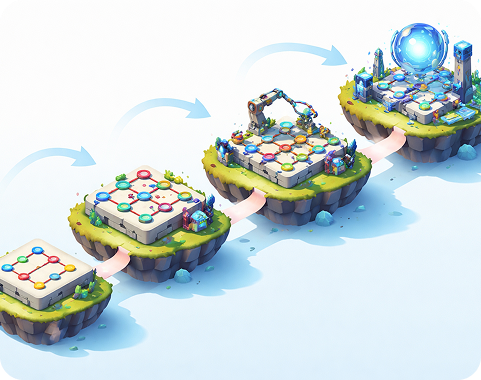
Stage 1 — Foundation
Simple alignment rules. Clear structure. Minimal elements.Stage 2 — Interaction
Elements begin influencing each other. Cause and effect appear.Stage 3 — Layering
Multiple rules combine. Patterns overlap.Stage 4 — Emergence
The grid behaves like a system. Then it clicks - you're not just moving pieces around, you're actually controlling everything.
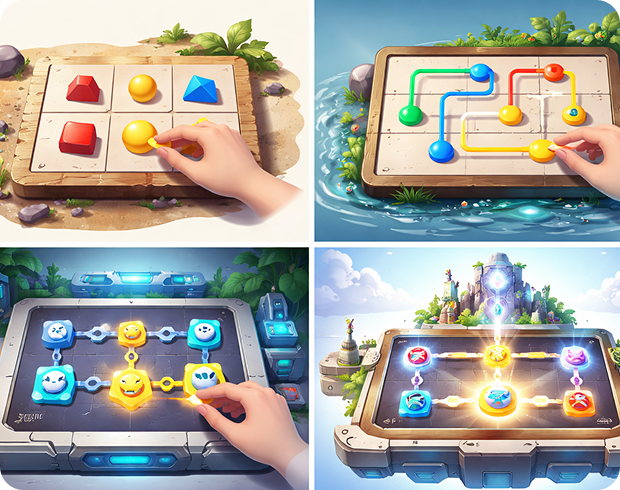
Gradual Complexity
Evolution Grid won't throw a bunch of mechanics at you all at once.
Instead, it introduces them one at a time.
Examples of evolving mechanics:
- Rule stacking
- Conditional interactions
- Pattern refinement
- Pattern refinement
- Constraint layering
- System stabilization
- Each new layer depends on your understanding of the previous one.
Structured Advancement
Progression is linear and intentional.
You unlock new levels only after mastering earlier systems.
The grid gets clearer but also way more complex as you go.
By the later stages, what once seemed simple becomes part of a larger framework.
Way better than those games that go from baby-easy to rage-quit impossible.
Focused Calm. Focused. Logical.
Clean Minimal Design
Light interface, structured spacing, geometric clarity.No Artificial Pressure
No forced timers in standard play.Deep Logical Satisfaction
When it finally clicks? God, it's just... chef's kiss Amazing feeling.Designed for Reflection
It's more about thinking things through than quick reflexes.
VISUAL GALLERY
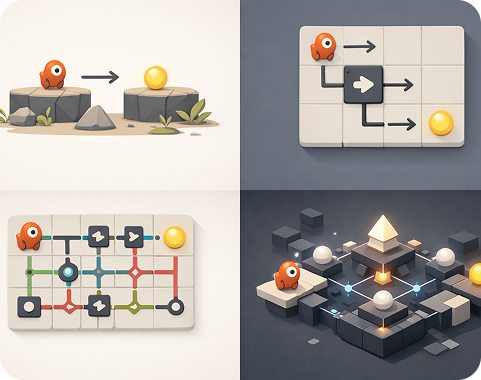
Early stage alignment
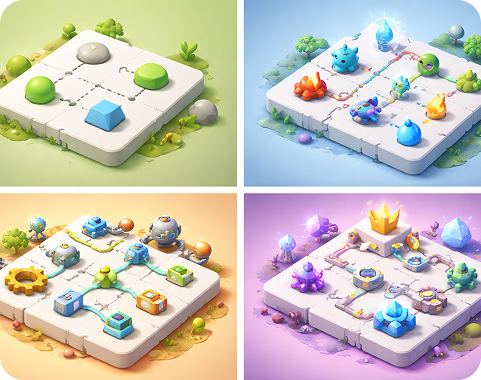
Conditional pattern layering
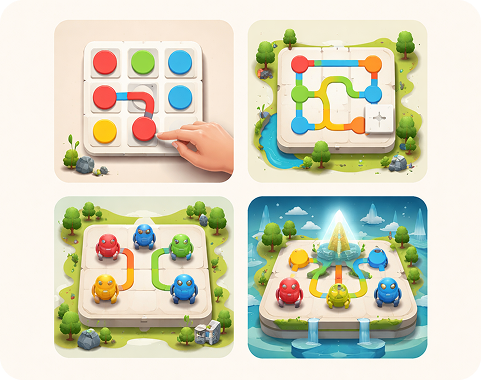
System interaction phase
Constraint refinement
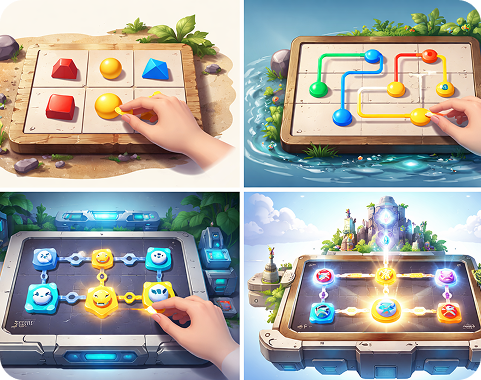
Emergent behavior in motion
FAQ
Is the progression linear?
Yes. Evolution Grid follows a structured progression. Each level unlocks after the previous one is completed. So you're not suddenly hit with something totally confusing.
Do I need prior experience with logic puzzles?
No experience is required. The game introduces mechanics progressively. Each stage builds naturally on previous knowledge. Over time, players develop intuitive understanding of more complex systems.
Are there time limits?
Standard mode does not include forced time pressure. Players can think through solutions carefully. Optional challenge modes may introduce efficiency scoring, but the core experience remains calm and reflective.
Is Evolution Grid difficult?
The early stages are intentionally simple and accessible. They focus on teaching core principles clearly. As the grid evolves, complexity increases gradually rather than abruptly. The tricky part isn't being fast - it's wrapping your head around how all these different systems work together.
What makes this different from other puzzle games?
Most puzzle games focus on repetition or pattern recognition. Evolution Grid focuses on system development. It's really about seeing how basic rules can create these surprisingly complex results. It's not about speed-running levels - the real payoff is when you finally get how everything fits together.
What Players Say About the Process
Thoughts from those who climbed the grid.
Ready to Begin the Process?
Start with a single rule.
Watch it evolve.
Shape the system step by step.
Begin the ProcessWatch it evolve.
Shape the system step by step.